Rooftop proof (composite): 149 days, 922 watering events, less guesswork
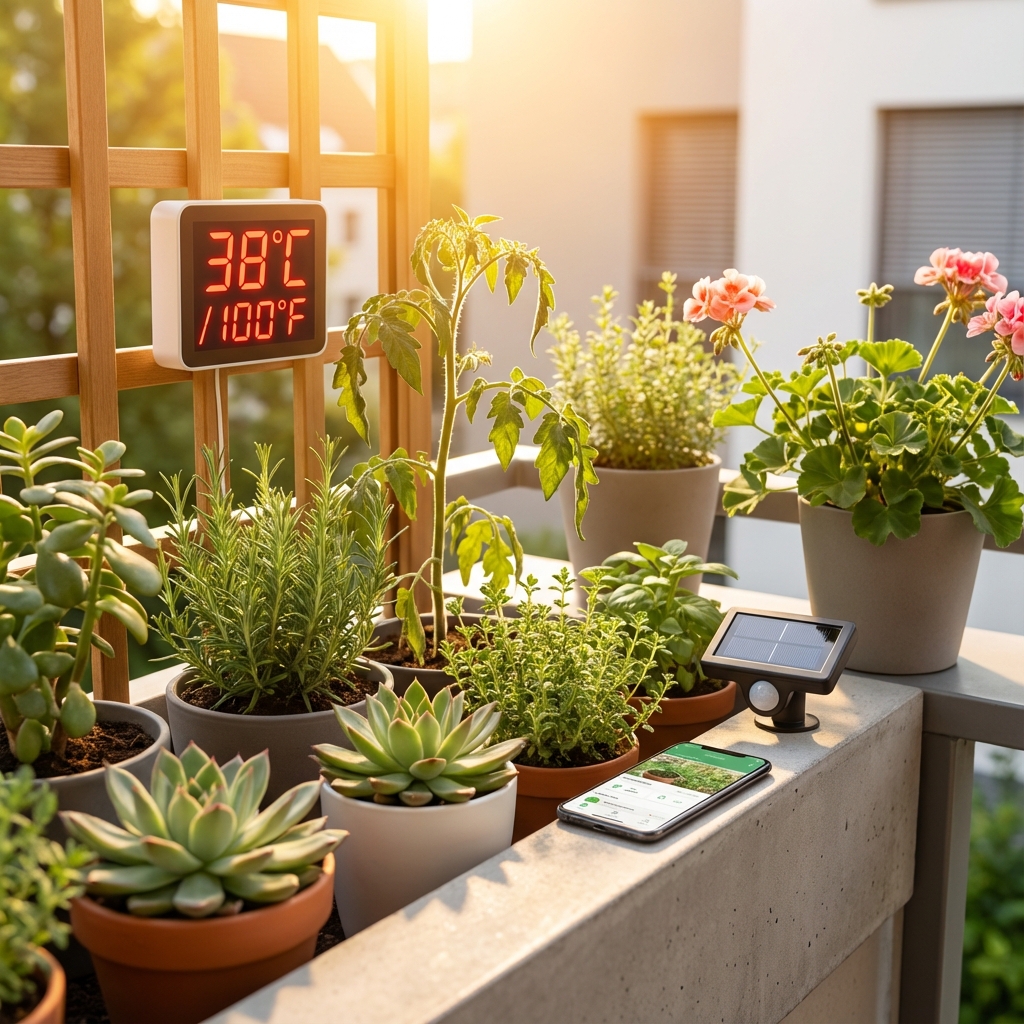
Terragrix was built on rooftops, not in a lab. We did not start with a product roadmap. We started with a rooftop that kept failing in different ways: wind on Tuesday, rain on Thursday, and a missed watering on Friday because the elevator was locked. The only thing that stayed consistent was the frustration.
This post is a composite of several rooftops and balconies. It is not a single client story. It is a set of patterns we saw across 149 days, 269 containers, 149 devices, about 4.8M readings, and 922 logged watering events. The numbers matter only because they show scale. The lessons matter because they show what actually changed outcomes.
Table of Contents
The roof that changed our priorities
The turning point was a rooftop garden attached to a hotel. The plants mattered because the dining room depended on them. The team was capable, but the conditions were chaotic. Access windows were short, helpers rotated, and rain would undo an entire morning of work. We kept adding more instructions and getting worse results.
That roof taught us that the goal is not to make people work harder. The goal is to make decisions simpler. The system had to reduce decisions, not add them.
The constraints across the sites
Every rooftop had its own rules. Some buildings banned hose connections. Some required check-ins with security. Many had limited storage for tools and soil. A few had neighbors who complained if watering dripped at the wrong time. And almost all had inconsistent staffing because this was not the primary job for the people on the roof.
Those constraints meant we needed a system that could survive real life. It had to be simple enough to follow on a rushed morning, but strong enough to handle a sudden storm. It had to respect the human constraints as much as the plant constraints.
The moment the routine took hold
On one site we had a rotating crew of three people who never overlapped. Each person had a slightly different way of watering, which meant the plants never had a consistent story. We did not fix it with training. We fixed it by making the list short enough that no one could interpret it differently.
Two weeks later the crew started sending photos without being asked. The plants looked better, but the bigger shift was in the tone of the texts. They stopped asking, “Is this right?” and started saying, “We finished the list early.” That change told us the routine had become real. The system was no longer an extra task. It was the way the work got done.
What we learned from the composite
We learned that signals beat schedules. A schedule is a polite fiction on a rooftop. Weather breaks it. Access breaks it. Humans break it. When we focused on a clean signal and a clear next action, the system felt trustworthy. That trust is what reduced missed watering and panic watering.
We also learned that proof changes behavior. When the team could see what happened after a watering, they stopped doubling up “just in case.” A clear record removed the anxiety that drives over-watering. It also reduced the blame game when something went wrong.
Finally, we learned that fewer alerts are better. A long list of notifications turns into noise. A short list turns into action. We keep the list short and meaningful. The rest is context, not tasks.
Mistakes we made
We tried to automate too early. We pushed for detailed rules before we had a stable baseline. That created confusion because the system was making decisions on shaky data. We learned to slow down and earn trust first.
We also tried to fix every edge case. That was a mistake. The best system does not solve every corner. It solves the common ones so well that the rare ones are obvious and manageable. When we accepted that, the product got calmer and the teams got faster.
We also assumed the data would speak for itself. It did not. We had to turn that data into a story people could understand. The story is what creates buy-in.
Numbers we watch, not formulas
We avoid publishing formulas, but we do share the numbers that tell us if a rooftop is stable.
- Morning completion: the percent of priority tasks finished before noon. If it stays high, the roof is predictable.
- Rescue rate: how often we have to add emergency watering outside the plan. Lower means the plan is working.
- Duplicate watering: if two people water the same container in one day, trust is low.
- Report time: if a weekly summary takes more than a few minutes, it will not happen.
These numbers are human as much as they are technical. They show whether a team can operate calmly at scale.
The composite results in plain language
Across the composite period we saw fewer double-waterings, earlier responses to stress, and fewer “surprise” plant failures. The biggest change was not the data. It was the routine. When the list was short, the team finished earlier. When the proof was simple, the client stopped asking for extra updates.
In other words, the system did not just improve plant health. It improved the pace of the week. That is what makes a rooftop sustainable.
Action steps if you are starting a rooftop
If you are starting today, here is the short list we wish we had.
- Get one clean watering curve per container before you automate anything.
- Label exposure in plain language. Wind and sun matter more than you think.
- Keep the task list short. If it does not fit in a morning, it will not happen.
- Build a weekly proof ritual with photos and a short summary.
- Review the same three questions each week: did we water on time, did we skip confidently, did the client feel informed?
Those steps are not flashy. They are the foundation that keeps the roof calm.
FAQ
Why a composite instead of a single case study?
Most rooftops share the same constraints, but each one has different quirks. A composite helps us show patterns without exposing a single client or site. The patterns are the useful part.
How do you avoid over-watering on rainy weeks?
We focus on clear signals and honest logs. When the team trusts the skip call, they stop watering out of habit. That trust is more important than any fancy rule.
What if my team is not technical?
That is normal. We design for people who do not want another app to learn. Short lists, clear names, and visible proof are what make the system usable.
Is this only for rooftops?
No. Balconies and courtyards share the same problems: limited access, microclimates, and the need for simple routines. The lessons transfer.
The real outcome of this composite is not a number. It is the feeling that a rooftop is manageable. Once you have that, the plants follow.