Feed without flood: fertilizing containers with Terragrix tasks
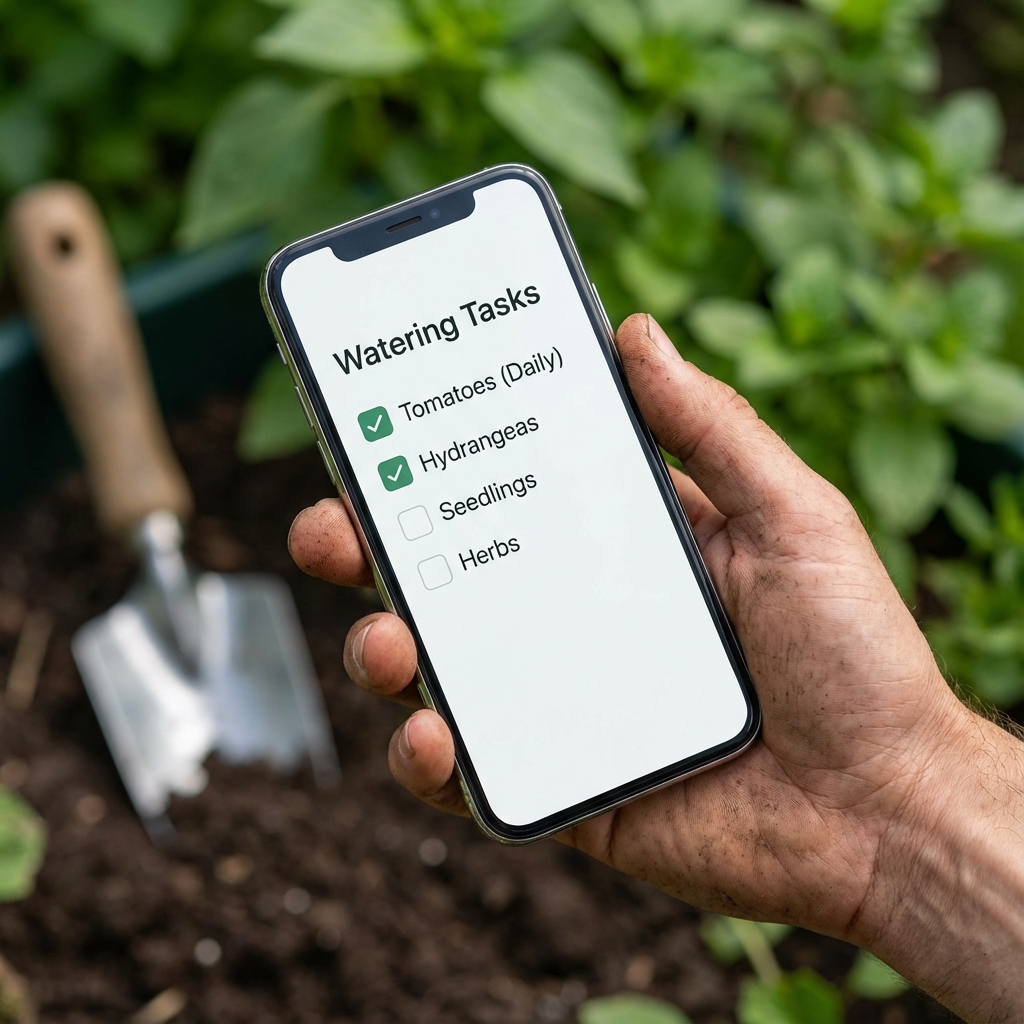
Feeding containers is where good intentions go to the sidewalk. I learned that on a quiet weekday morning when a neighbor walked downstairs, pointed at a brown stain on the patio, and asked if we were “dumping fertilizer” from the roof. We were not dumping anything on purpose. We were just watering like we always did, right after feeding. The runoff told a different story.
That moment reshaped how we think about nutrition. We stopped treating feeding as a bonus watering and started treating it as its own mode. If watering is about hydration, feeding is about patience. You want nutrients to linger near roots, not rush past them.
Table of Contents
The mistake we kept repeating
We used to fertilize when it was convenient. It was the same day every week, usually in the middle of the day, and we followed it with a full watering because that felt safe. We were doing what many people do: trying to combine tasks to save time.
It looked efficient on paper, but it was the opposite of effective. We saw wasted nutrients, salts building on rims, and plants that looked tired instead of nourished. We blamed the mix, then the weather, then the containers. The truth was simpler. We were rushing the part that needed to be slow.
The constraints we designed for
Most of our sites are not farms. They are balconies, rooftops, and courtyards with shared drains. Some have strict rules about runoff. Others have neighbors who do not want fertilizer scent near their windows. Access is often limited to mornings or early evenings, and water usage is monitored by the building.
Those constraints force you to be deliberate. You cannot just water until it runs through. You have to feed in a way that respects the space, the neighbors, and the plants. That shaped the routine we recommend now.
We also had practical constraints: no dedicated storage for bags of fertilizer, no space to mix large batches, and helpers who were not going to measure out five different ratios. Simplicity is not a preference for us. It is the only way the routine survives a busy week.
What we learned about feeding
Feeding is about consistency, not intensity. A small, steady application delivered at the right time will outperform a big, rushed application almost every time. Containers are sensitive systems. They do not have the buffer that in-ground beds have. They respond quickly to mistakes and slowly to recoveries.
We also learned that moisture matters more than calendar. A dry pot does not take nutrients evenly. A soggy pot does not hold them. We started checking moisture before feeding, not just because the sensors told us to, but because the results were visibly better. Leaves perked up, stems stayed firm, and we stopped seeing that crusty ring at the rim.
The ritual that works for us
Our feeding ritual is simple enough to teach in a single visit. If someone cannot follow it, we changed the ritual, not the person.
We lightly pre-wet a dry pot. We feed. We wait. If the plant is healthy, we hold off on a full watering until the next day. If the plant is stressed, we do a short follow up later that day, just enough to move nutrients down without flushing them out.
That is all. There is no magic dose and no secret schedule. The discipline is in the pause.
The first time we got it right
We first felt the shift on a small terrace with citrus and strawberries. The owner was nervous about runoff because the building had just resurfaced the patio below. We fed early, we pre-wet lightly, and we held the follow up until the next morning. Nothing dramatic happened that day. That is exactly why we remembered it.
A week later the leaves looked glossy, the strawberry runners had new growth, and the terrace owner stopped asking for updates every other day. The win was not the fertilizer. The win was the absence of drama. We had a routine that respected the space and the people around it.
Mistakes we made
We fed at noon because it fit our calendar. The heat made the water evaporate fast and left the nutrients uneven. We also mixed by eyeball, which is a polite way of saying we guessed. That worked fine until it did not. We saw burned tips, uneven growth, and a team that could not remember which mix to use where.
We also fed stressed plants because we were worried. We thought nutrition would rescue them. It rarely did. Most stressed containers need stability, not food. Once we separated “recover” from “feed,” the plants responded better.
Numbers we watch, not formulas
We track a few signals that tell us if feeding is working without getting into the math.
- Runoff complaints: if a neighbor mentions drips or stains, our method needs adjustment.
- Salt rings: a white rim is a visual sign we are being sloppy or too heavy.
- Leaf recovery time: after feeding, we look for a visible lift in a few days, not a day.
- Rework rate: if helpers are unsure and redo a feed, our instructions are too complex.
These are not scientific metrics. They are the real world signals that keep a rooftop operation sane.
Action steps for a cleaner feeding week
Here is the feeding checklist we actually use.
- Feed early in the day, not at noon. It buys you time to observe and adjust.
- If a pot is dry, pre-wet lightly. Even moisture leads to even feeding.
- Write the mix once and stick to it. Consistency beats improvisation.
- Pause after feeding. Let the nutrients settle before a full soak.
- Do not feed stressed plants. Stabilize first, feed later.
- Leave a short note in the container log so the next person does not double-feed.
This is not fancy. It is just careful, which is what nutrition in containers requires.
FAQ
Can I feed and water on the same day?
Yes, but keep the follow up light and targeted. The goal is to move nutrients into the root zone, not flush them through the drain.
What if rain is expected?
If a meaningful rain is likely, postpone feeding. The rain will do the flushing for you. Feeding right before rain is a fast way to lose nutrients.
How do I know if I over-fed?
Look for burnt tips, soft growth, or a white crust near the rim. Those are early signs. Slow down, flush gently, and give the plant time to recover.
Should I use liquid or slow-release fertilizer?
Use the one you can apply consistently. Liquid gives you more control. Slow-release gives you more forgiveness. Both work if you respect the ritual.
Feeding should feel like care, not stress. Once we started treating it as a calm routine instead of a bonus watering, the plants stopped arguing and the balcony stopped smelling like regret.